Login
Reset your password
We will send you an email to reset your password.


You’ve invested in a fully automatic machine. Maybe it’s a Jura, a Siemens EQ series, or a De’Longhi Magnifica. It sits proudly on the kitchen counter, quietly waiting to do what it does best, brew coffee at the push of a button.
But then the thought hits:
“Do I really need to put expensive specialty beans in this thing? Isn’t that overkill?”
Let’s answer that directly:
No, it’s not overkill. It’s common sense.
Putting cheap beans in a good machine is like putting cheap wine in a crystal decanter. Looks nice, tastes bad.
Specialty coffee in automatic machines isn’t about being fancy, it’s about getting the most out of your investment. Putting cheap beans in a good machine is like putting cheap wine in a crystal decanter. Looks nice, tastes bad.
TL;DR
Specialty coffee in automatic machines isn’t overkill, it’s smart. Ditch stale supermarket beans. Go for fresh, medium-roast specialty beans and avoid oily blends. Your machine (and taste buds) will thank you.
“Specialty” isn’t a label we slap on to raise prices. It’s a global scoring system. To qualify as specialty coffee, beans need to:
- Score 80 or higher on the Specialty Coffee Association (SCA) scale
- Be free from primary defects like mold, stones, or insect damage
- Offer traceability down to the region or even the farm
- Be processed and roasted to highlight origin character, not roast uniformity
This isn’t coffee-by-numbers. It’s a supply chain built on care and clarity.
And when beans like that go through your automatic machine? The result is cleaner, smoother, and full of character. It doesn’t take a barista degree to taste the difference.
There’s a reason supermarket shelves are packed with dark, oily, vacuum-packed coffee.
- It’s roasted in huge batches (read: old)
- It’s over-roasted to hide defects
- It’s blended with low-quality robusta for caffeine and crema
- The “best before” date is a joke, usually 12+ months out
This kind of coffee sits on a pallet before it ever hits your kitchen. No roast date, no origin info, and no flavor worth mentioning.
Putting that into a high-end machine? That’s a waste.
We’ve worked with every kind of machine, manual levers, semi-automatics, and yes, bean-to-cup automatics. And here’s the thing:
Your automatic machine doesn’t make the coffee taste better.
It just gets the job done, cleanly, consistently, and quickly.
If the beans are bitter, stale, or flat… that’s exactly what you’ll taste.
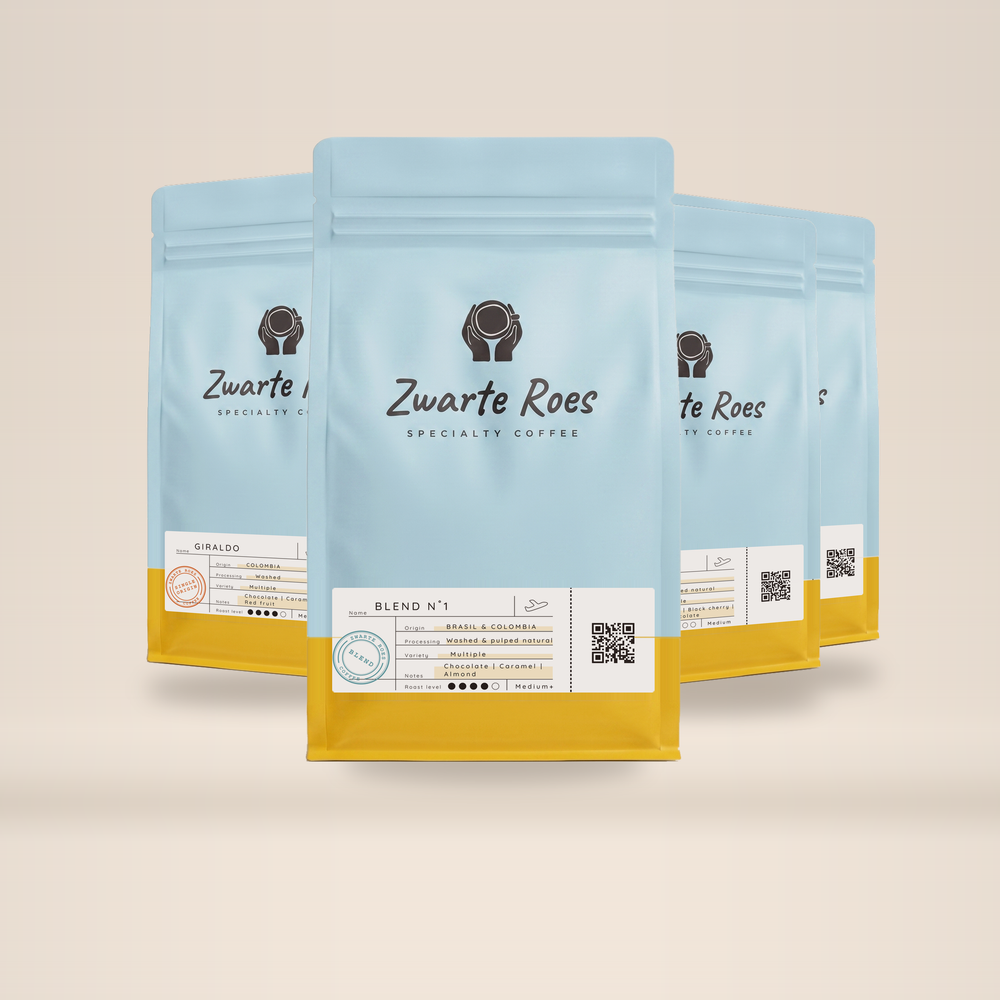
But load it with something like Brasil Mogiana Gold or Blend No1? You’ll get chocolate, nuttiness, and sweetness. And you didn’t even have to touch a scale or timer.
That’s the beauty of pairing convenience with quality.
Oily beans don’t just taste bad, they mess with your machine. When coffee is roasted too dark, oils rise to the surface and start coating the grinder and brew unit. Over time, this buildup causes clogs, off smells, and sticky residue that’s hard to clean.
Those oils also dull your grinder burrs faster. That means less consistent grinding, which leads to weaker, more uneven brews. You end up cleaning more and getting less out of your machine.
Supermarket blends and “espresso” beans often look shiny. That’s not quality, it’s over-roasting. At Zwarte Roes, we roast cleaner. Medium profiles, better flavor, and no grease traps.
This is a fair question.
Some light roasts don’t extract well in automatic machines. The grind can be too coarse. The brew temp is too low. The pressure is not quite enough.
But that’s not a reason to avoid specialty beans, it’s a reason to choose the right ones.
Stick to these rules:
- Medium roasts work best. Avoid super-light filter roasts unless your machine is dial-adjustable.
- Choose natural processed coffees for more body and sweetness.
- Go for beans roasted with automatic machines in mind, like our bestsellers.
We taste every roast with multiple brew methods, including bean-to-cup machines. If it doesn’t taste good there, it doesn’t go in the bag.
Freshness doesn’t last forever. Once beans are roasted, the clock starts ticking.
You can have the best machine and the best beans, but if you leave the bag half open on the countertop, you’ll lose flavor fast.
That’s why we urge everyone to learn how to store fresh coffee beans properly:
- Keep them in an airtight container
- Store them in a dark, cool place
- Avoid the fridge, humidity is the enemy
- Use them within 3, 4 weeks of roasting
- Don’t grind in advance
Automatic machines usually grind fresh for every cup. That’s a plus. But if the bean itself is old, you’re just grinding disappointment.
Why per kilo?
Because you’re getting fresher coffee at a better price. And if your machine is brewing a few cups a day, 1kg doesn’t last long.
Our regulars love buying Blend No1 and Brasil Mogiana Gold by the kilo. Here’s why:
- It’s more economical per gram
- It cuts down on packaging waste
- You’re not stuck reordering every week
- You can split the bag and freeze half for later (yes, properly frozen beans can retain freshness)
We’re not here to slap on some meaningless “barista grade” label or fake sustainability claims.
We tell you:
- Which farm or region the bean came from
- How it was processed (washed, natural, honey)
- When it was roasted
- What flavor notes to expect
- Whether it’s roasted for filter, espresso, or both
No guesswork. No greenwashed nonsense.
That’s the kind of transparency your machine deserves. Because you don’t need to be a connoisseur to want coffee that’s real.
Automatic machines and decaf often get a bad rap. But here’s the thing: most decaf is bad because the beans are bad. Not because they’re decaf.
We offer Swiss Water Processed decaf, like our Decaf Brasil, roasted fresh just like our regular beans. No chemicals. No weird aftertaste. And yes, your machine will brew it just fine.
If you’re trying to cut caffeine or want an evening cup, this isn’t second-class coffee. It’s just another option, done right.
Here are our go-to picks for fully automatic machines:
- DECAF Brasil - For anyone cutting back on caffeine without sacrificing flavor. Swiss Water Processed, clean, and balanced. Your machine won’t notice it’s decaf—and neither will you.
- Brasil Capricornio - A bold, classy espresso with structure. Great body, no bitterness. Pairs especially well with milk drinks or stronger extractions.
- Brasil California Love - Bright, sunny, and sweet. A modern Brazilian espresso profile that brings fruit and clarity without going too far off-script.
If your machine costs more than €500 and you’re feeding it stale supermarket beans, you’re not getting your money’s worth. Not even close.
We’re not asking you to become a coffee geek. You don’t need to swirl and slurp. Just switch to better beans. That one move changes everything.
You’ll taste more. Waste less. Clean less. And enjoy the thing you bought the machine for in the first place: good coffee, without effort.
So no, specialty coffee in automatic machines isn’t too much. It’s the bare minimum for anyone who actually cares what’s in their cup.
You live in the Netherlands. You care about what goes into your fridge, what kind of cheese you eat, which bakery bakes your bread.
So why settle for bad coffee?
Automatic machines were designed to simplify coffee, not dumb it down. If anything, they need better beans because you can’t tweak much else.
- No weighing
- No dialing in
- No temp control
So the beans do the heavy lifting.
That’s why specialty coffee in automatic machines isn’t just acceptable, it’s necessary. The machine handles the brew. We handle the roast. You enjoy the result.
Everyone stays in their lane. We roast for real people, not coffee influencers.
Your machine is fine. Your routine is valid. Now give it the beans it deserves.
Because good coffee shouldn’t be complicated, just fresh, honest, and better than whatever’s in aisle 4 in Jumbo.